7 Signs a Resume Was Generated Using AI to Match Your Job Description
Candidates increasingly use AI to generate resumes that perfectly match job descriptions. Learn how recruiters can detect AI-generated resumes and verify real skills quickly.
Insights, guides, and best practices for modern recruitment teams leveraging AI.

Candidates increasingly use AI to generate resumes that perfectly match job descriptions. Learn how recruiters can detect AI-generated resumes and verify real skills quickly.

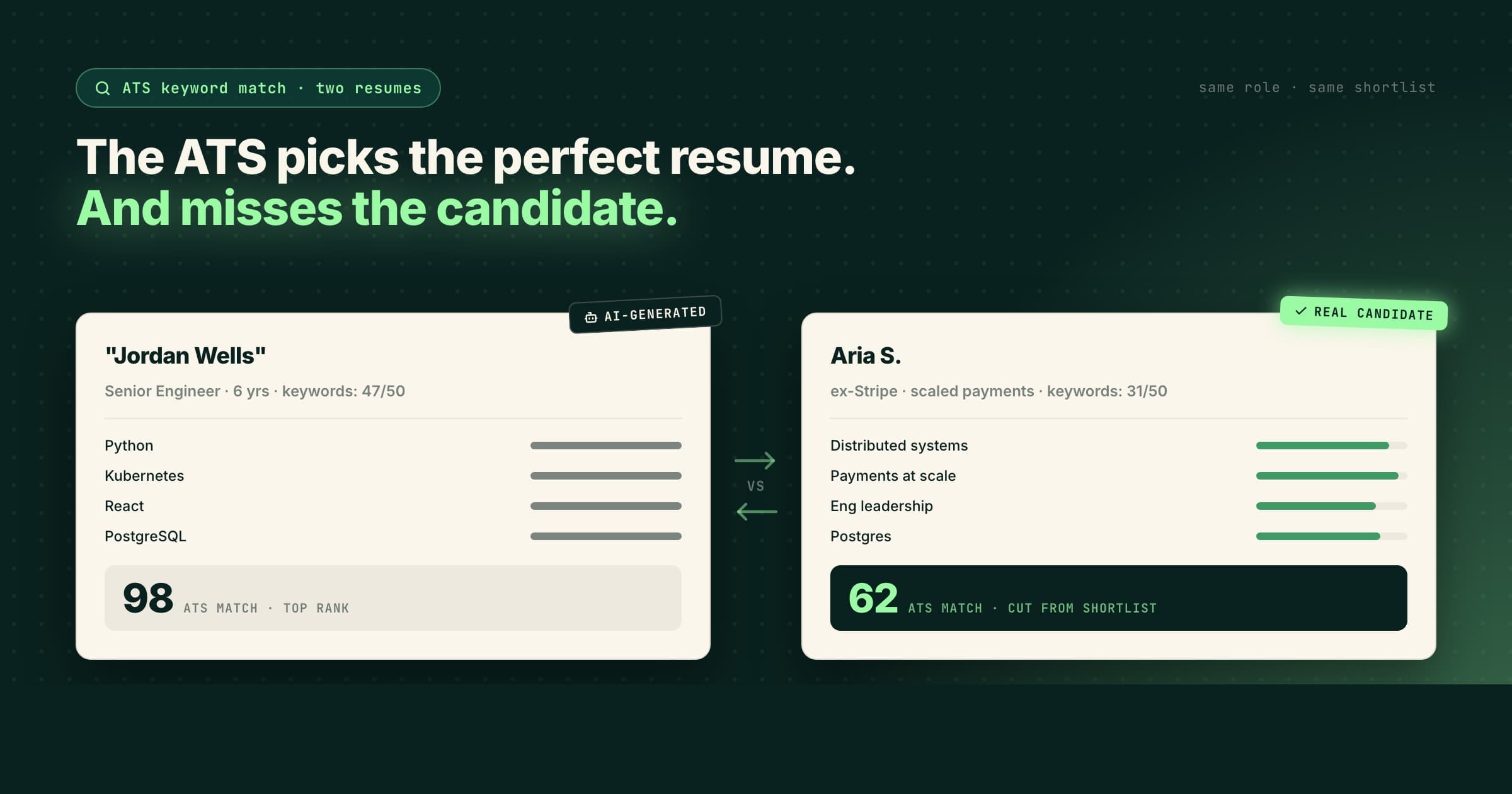
Your ATS ranks resumes by keyword match, but AI-generated resumes game that system perfectly. Learn why traditional screening breaks down and what modern AI screening does differently.

For years, companies have relied on manual resume screening as if it were just another administrative step. But anyone who's ever sat with a stack of applications knows the truth - screening isn't a task, it's a time trap.

If there's one thing 2026 is teaching HR leaders, it's this: Hiring is no longer an operational function. It's an intelligence system. The world of talent acquisition is undergoing a profound transformation.

Hiring isn't slow because recruiters lack skill, effort, or intent. Hiring is slow because everything around hiring is broken. AI isn't here to replace recruiters - it's here to rescue them.

When an AI system rejects a candidate, many people's first instinct is to blame the technology. But what if the real problem isn't the AI - it's the process around it?

Resume screening is broken. Every recruiter knows this. Monday morning brings 500 applications. By Wednesday, you've read maybe 50. By Friday, the best candidates have already accepted offers somewhere else.

You know that sinking feeling when your hiring team is swamped? When there are hundreds or thousands of applications, dozens of phone screens to schedule, and every recruiter is drowning in tasks they shouldn't even be doing? That's the daily grind of high-volume hiring, and it's broken.

Recruiters have always been trained to quickly scan resumes, spotting keywords, identifying patterns, and noticing inconsistencies or gaps. But let's be honest, when you're going through 200+ resumes for a single role, nobody has the luxury of deep reading.

If nearly 38% of Gen Z candidates are dropping out of hiring processes before they even reach the interview stage, it's worth asking: Are you unintentionally pushing away Gen Z before they even enter your pipeline?

If you're hiring right now, you already know the pressure. One urgent role can fill your inbox with 300+ resumes. Now imagine needing to hire 50 people in two weeks, without slowing down your team or compromising on quality.

Every recruiter knows the frustration. Monday morning arrives with 300 new applications in your inbox. Each resume needs careful review, skills assessment, and cultural fit evaluation. Traditional hiring methods create bottlenecks that hurt everyone involved.

Companies hiring at scale face a common problem: sorting through hundreds of applications takes forever, and quality candidates slip through the cracks. Three names consistently appear in conversations about bulk hiring: BotFriday AI, Goodspace, and HeyMilo.

Most hiring managers spend 40-60% of their time on resume screening, only to realize that 80% of applications don't even meet basic requirements. This blog will show you exactly how much time you're losing to manual resume screening and provide concrete solutions.

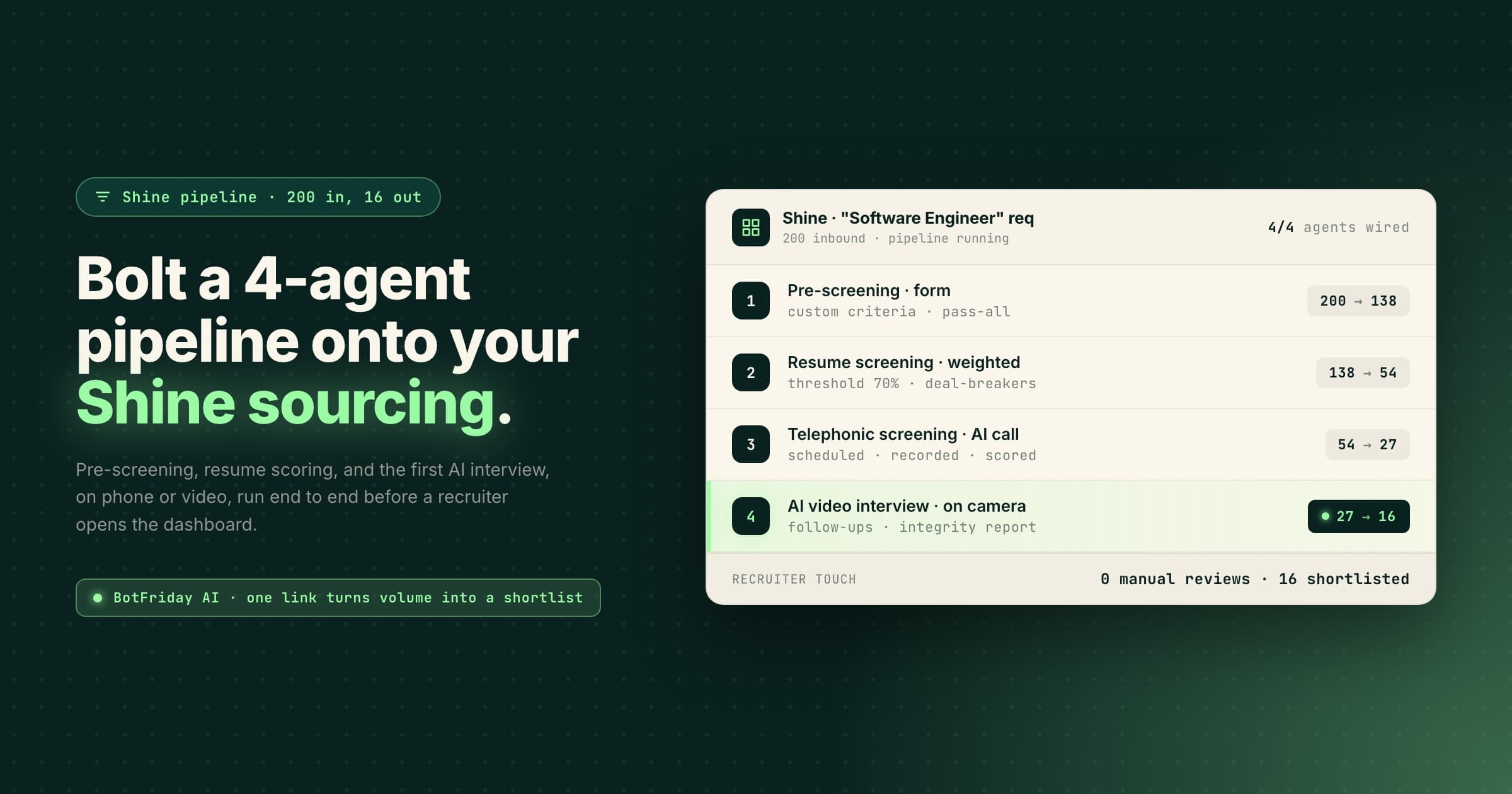
Your company has just secured a significant contract that necessitates hiring 200 new employees within the next month. Your inbox is flooded with thousands of resumes, and despite weeks of effort, you're still nowhere close to your hiring goals.

The interview ended. The Telephonic Screening Agent, the AI, signed off with a polite farewell. As I hung up, one thought lingered: Now what? I had just been interviewed by AI... but how did I do?

Every leader has experienced a regret hire. The credentials looked great, the interviews went well, and then something didn't work out. Most hiring failures come from hidden assumptions, not candidate deficiencies.

A few years ago, I hired someone remotely who absolutely aced their interview. Their resume was stellar. Their domain knowledge was solid. But within the first two weeks, I realized something was off.

What happens when you apply for a job through your own AI hiring system? I did something unexpected last week - I applied to see what it really feels like to be interviewed by our AI voice agent.

Let's be honest, most interviews are broken. After conducting over hundreds of interviews across functions, roles, and industries, here's the one thing I've learned: Great interviews aren't about catching people off guard.

Recruitment has always been about connecting people, building strong teams, and shaping the culture that makes a company unique. But over the past decade, artificial intelligence has quietly moved from a futuristic buzzword to a trusted partner in hiring.

High-performance teams aren't built by luck. Two HR leaders share their philosophies on structured hiring, calibrated evaluation, and where AI can support without replacing human judgment.

Something interesting is happening across India Inc. The boardroom is finally facing questions that HR has long tiptoed around, thanks to a generation that refuses to play by blurry rules.

The traditional resume is starting to break. Degrees are unreliable predictors of performance, and work experience often reads more like a list of companies than a record of ability. That's where skill-based hiring comes in - not as a trend, but as a reset.

When you're processing hundreds of resumes a day, inconsistencies slip through. AI catches what tired eyes miss: timeline gaps, inflated titles, copied templates, and more.

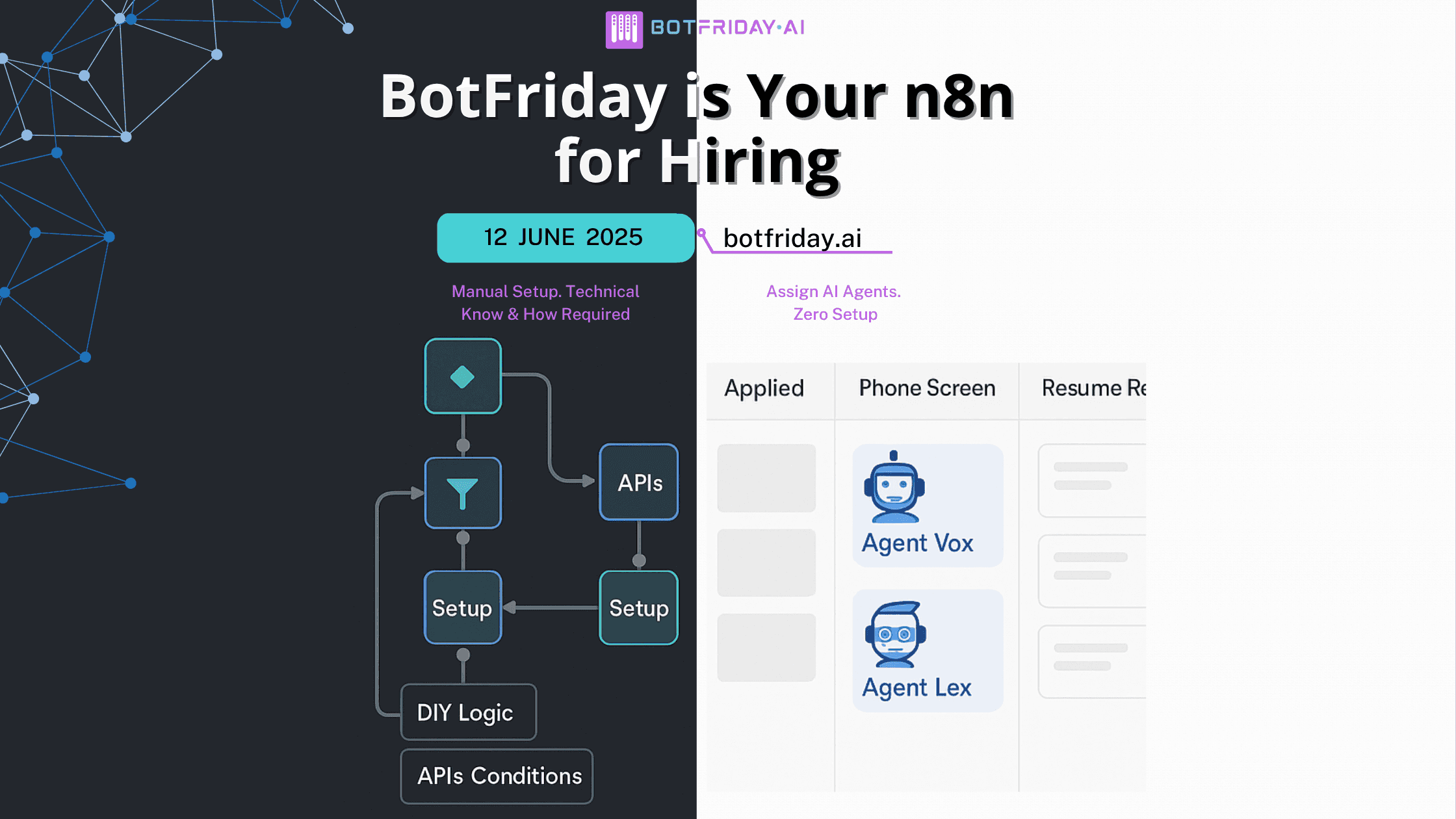
If you've ever used n8n, you know the magic of building complex workflows without writing much code. BotFriday brings that same spirit of automation, but focused entirely on hiring with AI agents pre-configured for recruitment workflows.

At BotFriday, we made a clear decision early on. We weren't going to ask hiring teams to switch platforms. Instead, we built AI recruiting agents that deploy directly into the systems you already use.

Are agentic AIs going to replace regular recruiters or HR folks in their roles? Let's be brutally honest. Yeah, some people will be replaced. Or at the very least, parts of their job will be carved out and automated away.

Notion has been a darling of the startup world for the last few years. Founders especially love having a place to manage all their business verticals without buying additional software. An important use case where Notion has been extremely valuable is hiring.

Every founder has a version of the same story. You open your ATS or inbox and see 60 new applications. By the time you finally reach out, the best candidate's already gone, hired by someone faster.
Follow us on LinkedIn for hiring tips, product updates, and AI recruitment insights.
Follow us on LinkedIn